

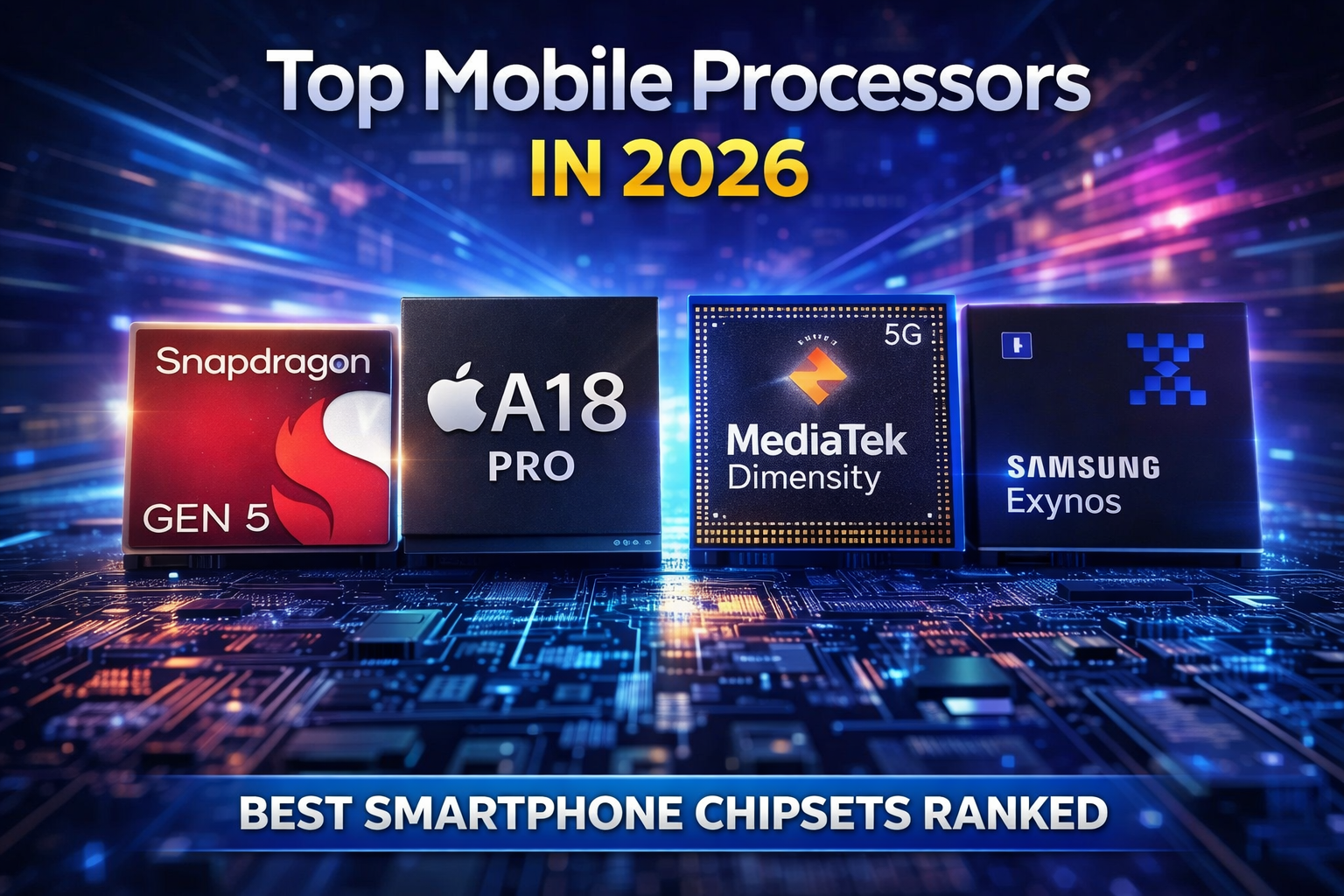
Mobile processors are the heart of every smartphone, determining how fast, efficient, and powerful a device can be. From gaming performance to AI processing and battery efficiency, the chipset plays a crucial role in overall smartphone performance.
In recent years, companies like Qualcomm, Apple, MediaTek, and Samsung Electronics have pushed mobile chip technology to new heights.
In this article, we will explore the top mobile processors in 2026, their specifications, performance capabilities, and which smartphones use them.
1. Snapdragon 8 Gen 5
The Snapdragon 8 Gen 5 is expected to be one of the most powerful Android smartphone processors in 2026. It is designed for flagship smartphones and delivers exceptional gaming and AI performance.
Key Features
Built on advanced 3nm architecture
Powerful AI engine
Adreno next-gen GPU
Support for 200MP cameras
8K video recording support
Best For
High-end Android smartphones
Mobile gaming
AI-based photography
2. Apple A18 Pro
The Apple A18 Pro powers premium iPhones and is known for its outstanding efficiency and performance.
Apple’s custom silicon design allows the A-series processors to outperform many competitors in real-world performance.
Key Features
Advanced 3nm chip design
Powerful Neural Engine for AI
Industry-leading CPU performance
Exceptional power efficiency
Best For
iPhones
Video editing
Long-term performance stability
3. MediaTek Dimensity 9400
The MediaTek Dimensity 9400 is MediaTek’s flagship processor designed to compete with Qualcomm's Snapdragon series.
It delivers strong gaming performance and efficient power management.
Key Features
ARM Cortex flagship cores
Powerful Immortalis GPU
Advanced AI engine
High-speed 5G connectivity
Best For
Gaming smartphones
Flagship Android devices
Camera performance
4. Samsung Exynos 2600
The Samsung Exynos 2600 is Samsung’s premium processor used in select flagship smartphones.
Samsung continues to improve Exynos chips with better graphics performance and AI processing capabilities.
Key Features
Advanced GPU architecture
Integrated AI engine
High-speed 5G modem
Optimized power efficiency
Best For
Samsung flagship phones
AI photography
Multitasking
5. Google Tensor G4
The Google Tensor G4 focuses heavily on AI and machine learning performance.
Google designed this processor specifically for Pixel smartphones to enhance AI-powered features.
Key Features
Advanced AI processing
Real-time language translation
Smart image processing
Optimized Android experience
Best For
AI-driven smartphone features
Photography enhancements
Pixel devices
How Mobile Processors Affect Smartphone Performance
A smartphone processor directly impacts several key aspects of device performance:
1. Speed and Multitasking
A powerful processor allows faster app loading, smoother multitasking, and lag-free performance.
2. Gaming Performance
Modern chipsets include powerful GPUs that improve gaming graphics and frame rates.
3. AI and Camera Processing
Advanced AI engines enhance camera performance, portrait photography, and night mode.
4. Battery Efficiency
Newer processors use smaller manufacturing nodes like 3nm, which improves power efficiency and battery life.
Which Mobile Processor Is the Best?
Choosing the best processor depends on your needs:
| Use Case | Best Processor |
|---|---|
| Android flagship performance | Snapdragon 8 Gen 5 |
| iPhone performance | Apple A18 Pro |
| Gaming smartphones | Dimensity 9400 |
| Samsung phones | Exynos 2600 |
| AI-focused features | Google Tensor G4 |
Final Verdict
Mobile processors have evolved significantly, delivering desktop-level performance inside smartphones. Chipsets like the Snapdragon 8 Gen 5, Apple A18 Pro, and Dimensity 9400 provide exceptional speed, powerful AI capabilities, and improved energy efficiency.
When buying a smartphone in 2026, checking the processor is essential because it directly affects performance, gaming experience, camera capabilities, and battery life.



Comments
Login or create an account to post a comment.